
Travel to Estonia
Check out this complete guide on how to get to Estonia, which covers travel by plane, cruise ship, bus, ferry, train, car, or private boat.
Coming to and staying in Estonia
There are many reasons to come to Estonia — tourism, studying, working, entrepreneurship, or family-related purposes.
On the Visit Estonia website, you will mainly find tourism-related information, but here is a brief overview of the main ways to come to Estonia and which permits or visas are required.
Visiting Estonia as a Tourist
You can come to Estonia as a tourist either visa-free or with a Schengen visa. It depends on your citizenship.
Visa-free travel applies to citizens of the EU, EEA, and Schengen Area countries, as well as many third countries. If your country of citizenship does not have visa-free travel, you need a short-term Schengen visa (C-visa), which allows you to stay in Estonia for up to 90 days within a 180-day period.
More information:
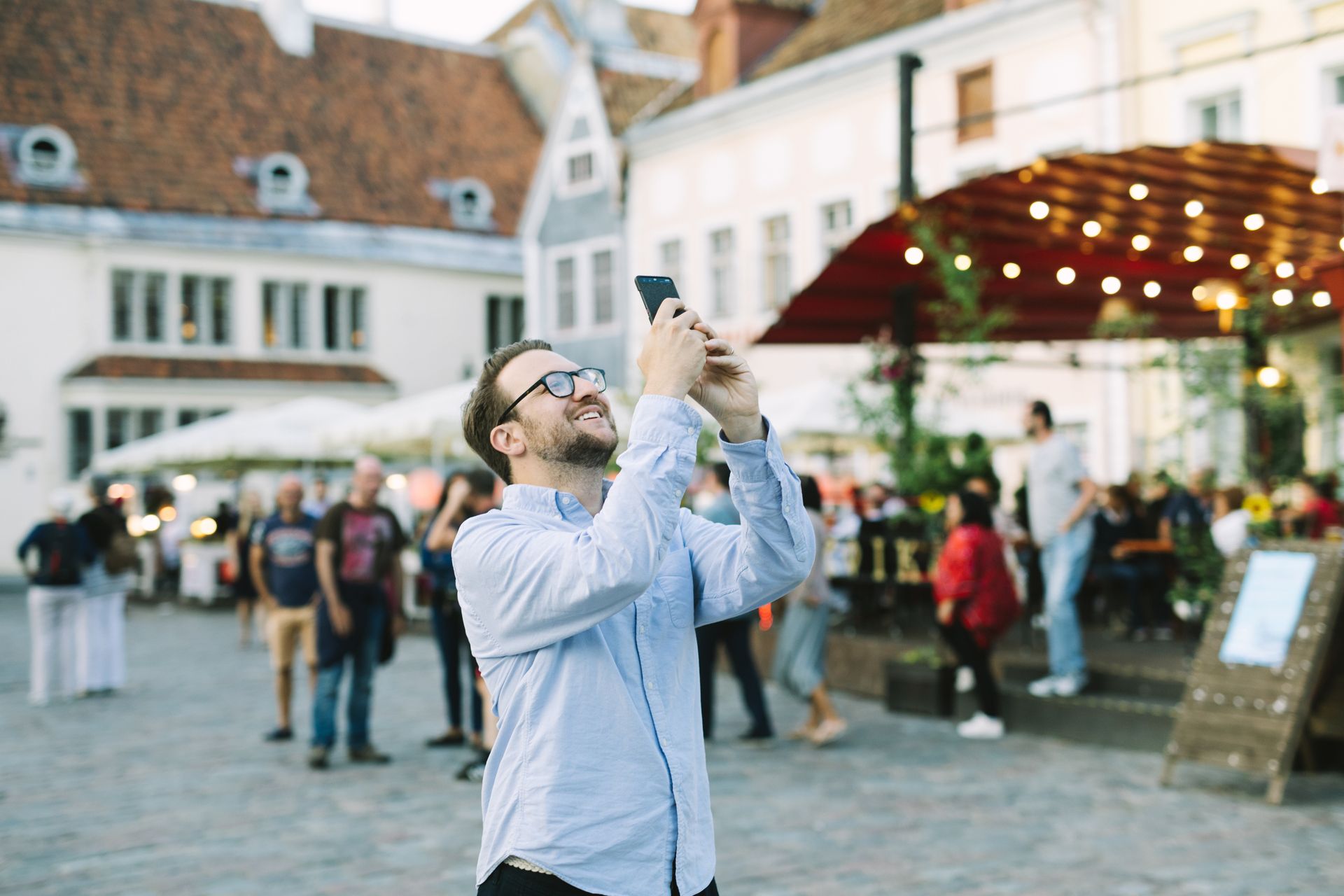
Photo author: Rasmus Jurkatam
Studying in Estonia
If you plan to study in Estonia for more than 90 days, you need a residence permit for study purposes.
This permit is issued by the Police and Border Guard Board. You can apply for this permit if you are enrolled in full-time studies at a recognized educational institution.
More information:

Photo author: Estonian Business School
Working in Estonia
To work in Estonia, you must apply for either a work visa or a residence permit for employment purposes, depending on your citizenship.
Short-term work is possible with a D-visa. For long-term employment, you need a residence permit issued by the Police and Border Guard Board. Before you start working, your employer must register your employment with the Labour Inspectorate.
More information:
- Working in Estonia as a foreigner
- Coming from abroad to work in Estonia
- Official guide to finding a job in Estonia
Digital Nomad Visa and e-Residency
Estonia offers the opportunity to apply for a Digital Nomad Visa, which allows a foreigner to live in Estonia for up to 12 months while working remotely for a company or clients located outside Estonia.
e-Residency, on the other hand, enables you to manage a business digitally without physically living in Estonia.
More information:
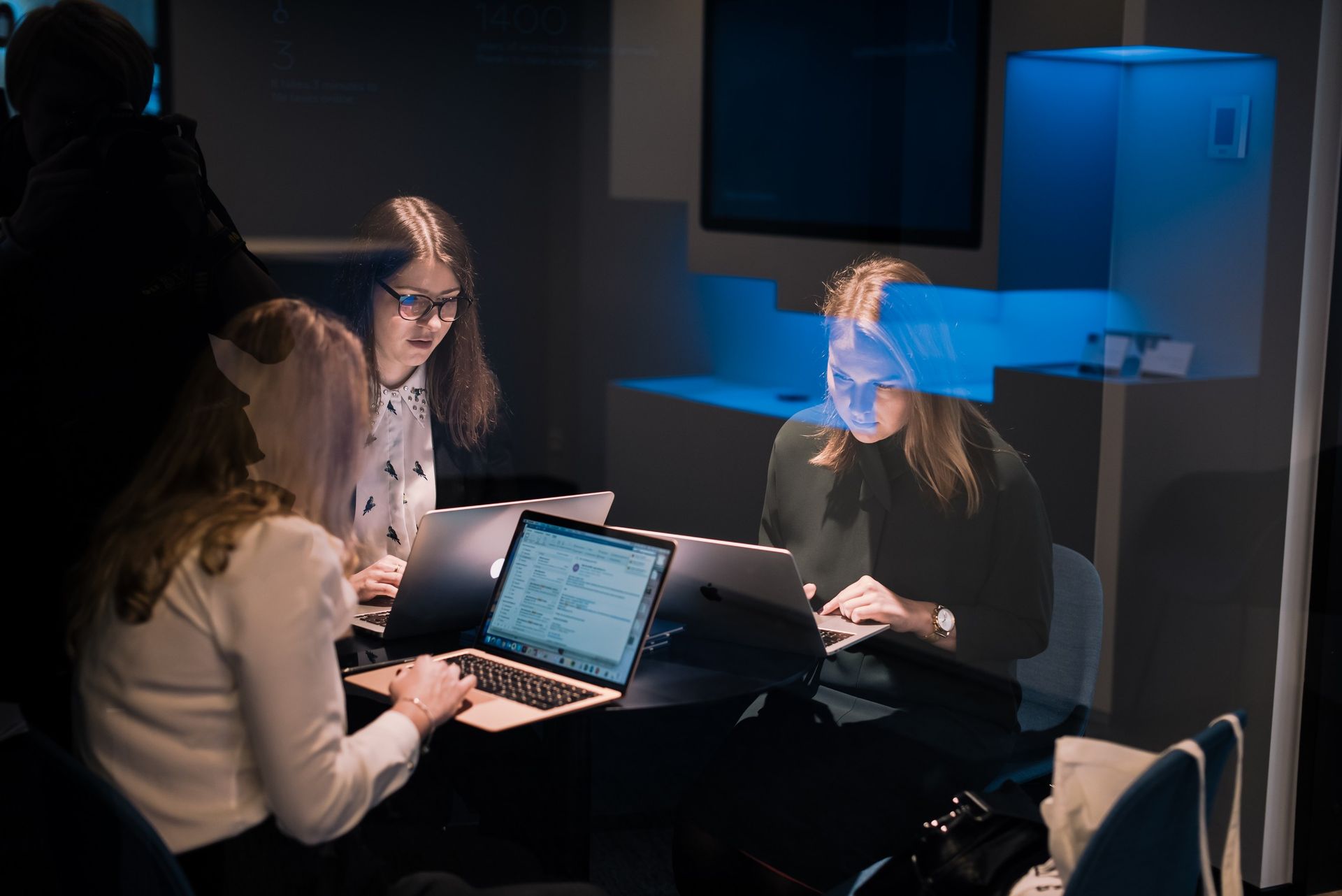
Photo author: Jelena Rudi
Indefinite stays in Estonia
Residence Permit Based on Family Life and Marriage
If you are married to, or the partner of, an Estonian citizen or a person residing in Estonia with a residence permit, you can apply for a residence permit on the basis of family life. This permit is issued by the Police and Border Guard Board.
More information:
Long-Term Residence and Citizenship
If you have legally lived in Estonia for at least five consecutive years, you may apply for a permanent residence permit. Estonian citizenship can be applied for through naturalization after living in Estonia for at least eight years, provided you have passed the Estonian language exam and the test on the Constitution and the Citizenship Act.
More information:
Settling in and adapting to life in Estonia
If you plan to move to Estonia — to study, work, or join your family — you can find practical guidance for adapting on the Settle in Estonia portal.
There you’ll find information about registering your place of residence, applying for a personal identification code and ID card, opening a bank account, and other topics related to everyday life.
It is possible to get to Estonia by land, water, and air.
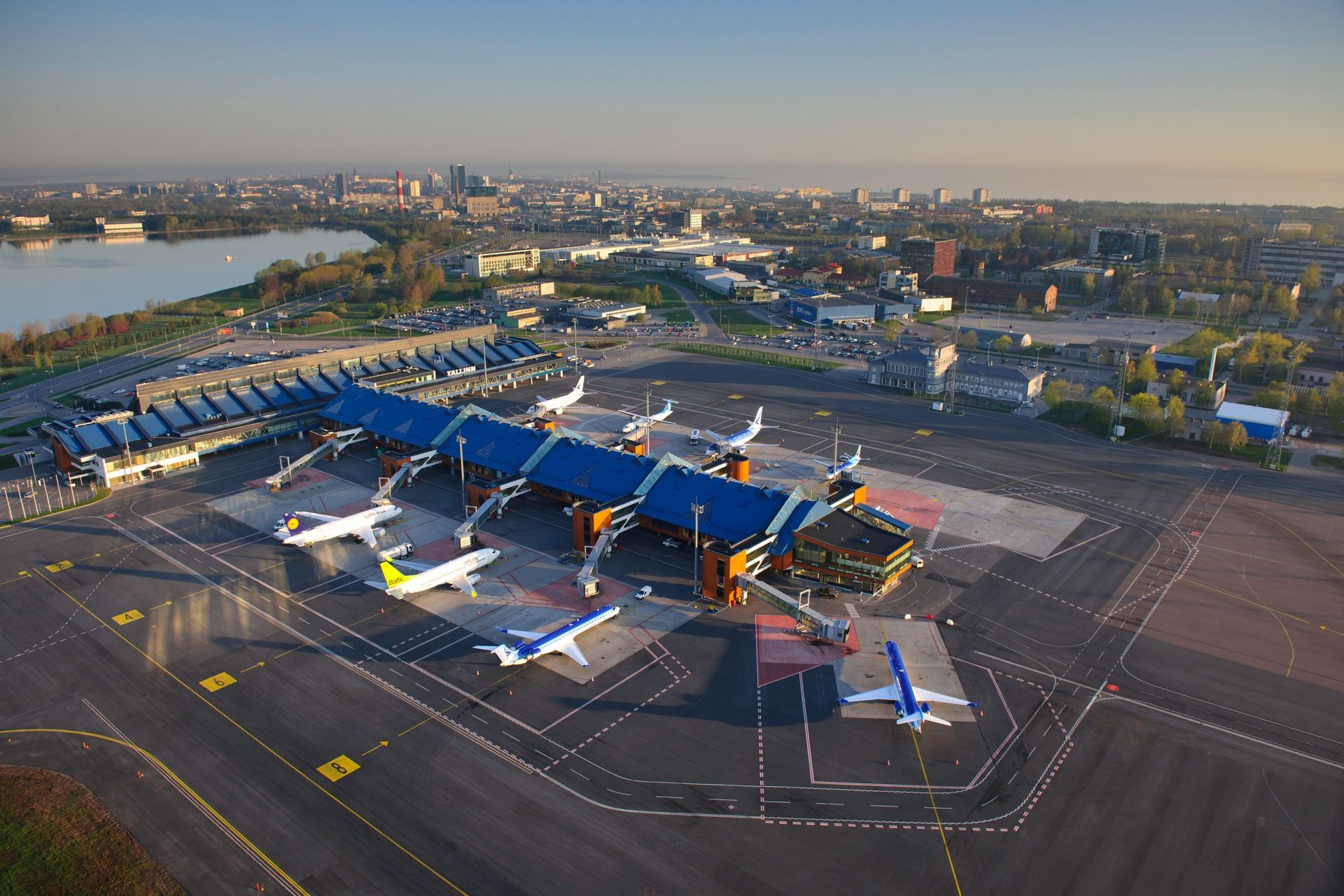
Estonia is located in northern Europe, bordered on the south by Latvia, and Finland to the north over the Baltic Sea. Regular ferries run between Tallinn, Helsinki, and Stockholm, and landing at Tallinn Airport places you right in the middle of the city.
By plane
Tallinn Airport is conveniently located only four kilometers from the city center.
You can easily travel to and from the airport by bus or taxi. Buses 2 and 15 depart from the airport and travel to the city center. They leave from the lowest level (stop Lennujaam), which is down the escalator from the arrivals hall.
The flights from Oslo and Stockholm to Tallinn are all under two hours. You can fly from Helsinki to Tallinn in 20 minutes, and from Helsinki to Tartu in a little less than an hour. More information about flight schedules is available on the Tallinn Airport website.
From Tallinn Airport, you can also catch domestic flights to Kuressaare (the capital of Saaremaa Island), Tartu, and Kärdla (a town on the island of Hiiumaa).
Starting from June 2026, there will be direct flights between Helsinki and Saaremaa, making it even easier to explore beyond Tallinn!
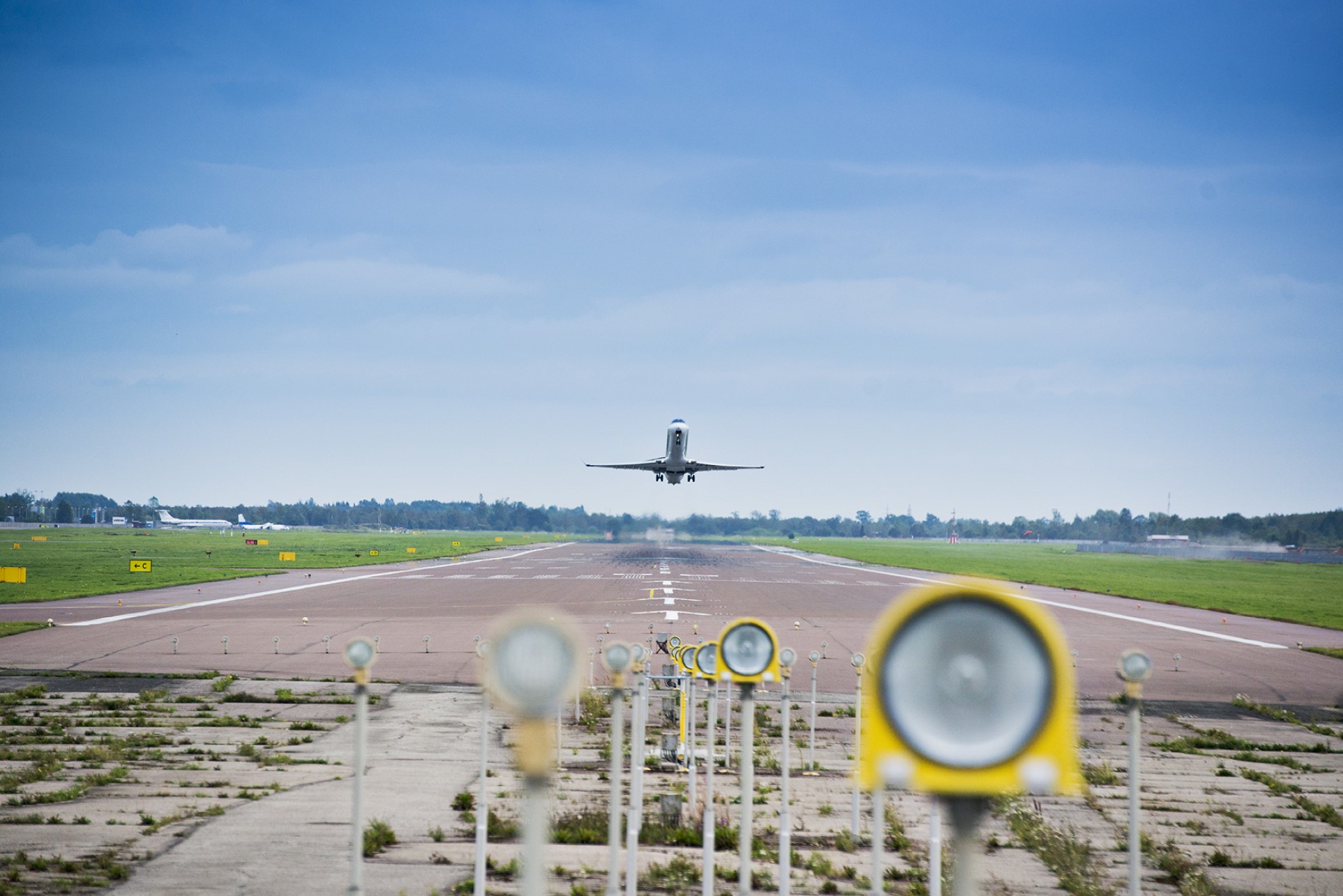
Photo author: Tallinn Airport
By ferry
Tallinn Port is located a 15-minute walk from the city center.
The ferry ride from Helsinki will take around 2-2.5 hours (except for one ferry, which takes four hours). The trip from Stockholm to Tallinn is a 12-hour overnight ferry ride.
The following ferry operators service the lines:
More information about ferry lines and tickets is available below:
- laevapiletid.ee — can see all ferry ticket options, administrated by Estravel (Estonian travel agency)
- portoftallinn.com
There is also a ferry connection between the western town of Paldiski and Kappelskär, Sweden, with DFDS or with Tallink. The journey takes 10 hours, making it faster than the 12-hour trip to Stockholm. Paldiski is about an hour from Tallinn, but it can also be used as a starting point for a road trip around Estonia.
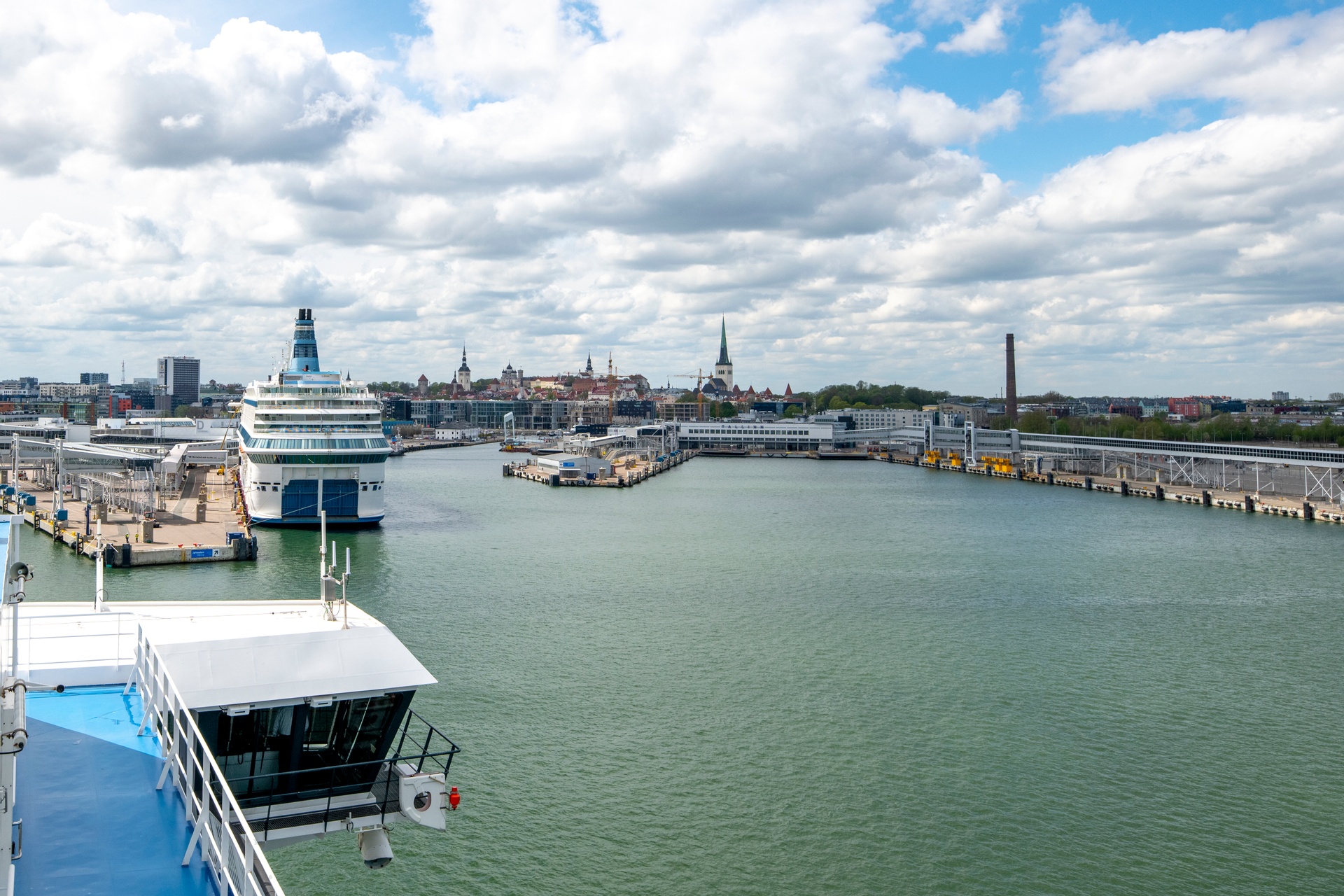
Photo author: Vaas / Transpordiamet
By cruise ship
Tallinn is a popular cruise destination, especially during the summer.
All main lines crossing the Baltic Sea stop in Tallinn.
In addition to Tallinn, Estonia’s largest island, Saaremaa, is another popular cruise destination. The port of Saaremaa is located 45 minutes by car from Kuressaare, the biggest town on the island.
For more information, please browse the list of all cruise operators currently sailing to Estonia.
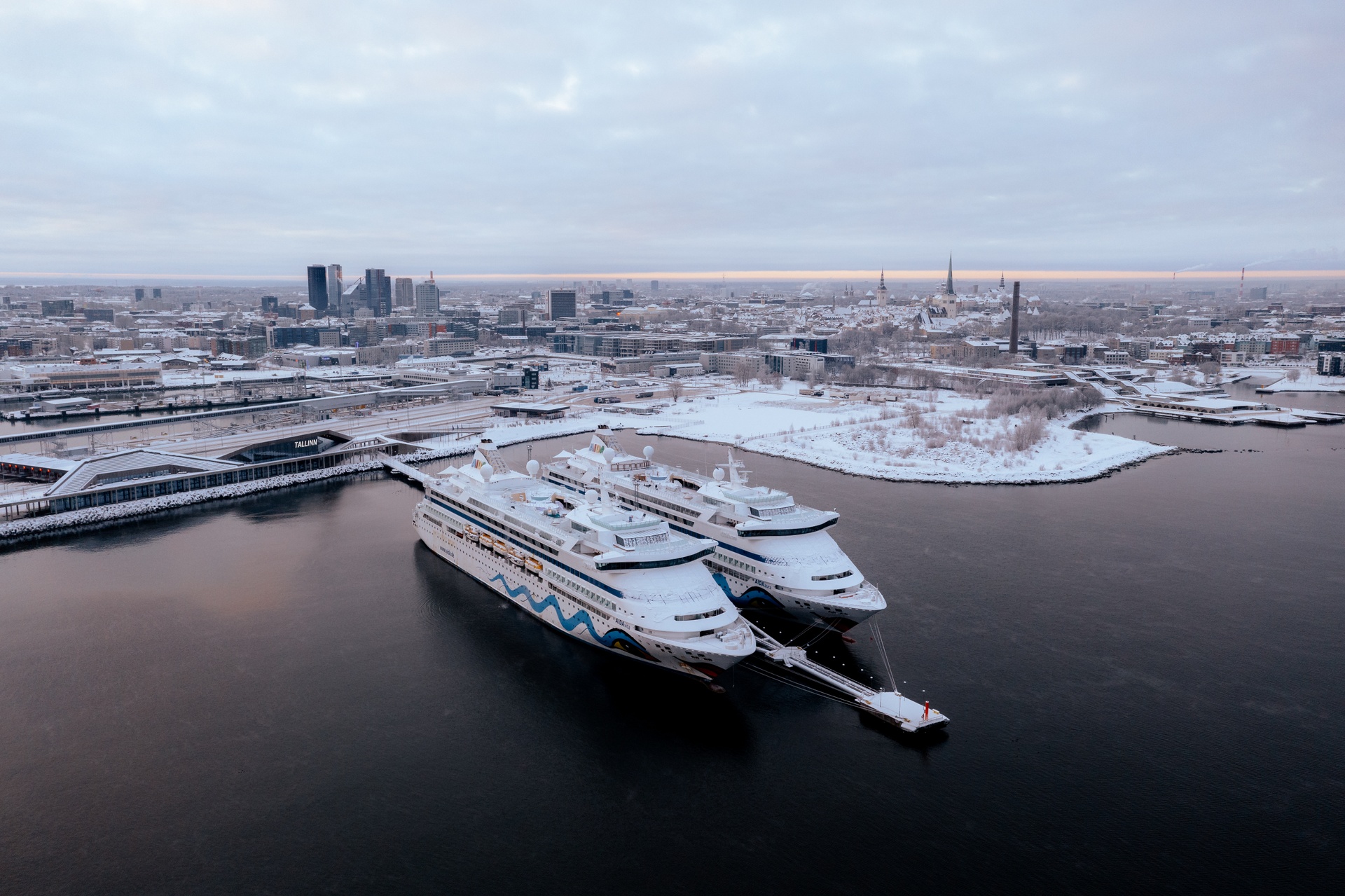
Photo author: visit estonia
By train
Thanks to an agreement between Estonia and its Baltic neighbors, it is now possible to travel comfortably by train between Tallinn, Riga, and Vilnius.
The connection operates once a day in both directions and includes a transfer in Valga.
Read more about the route and purchase tickets on Elron's website.
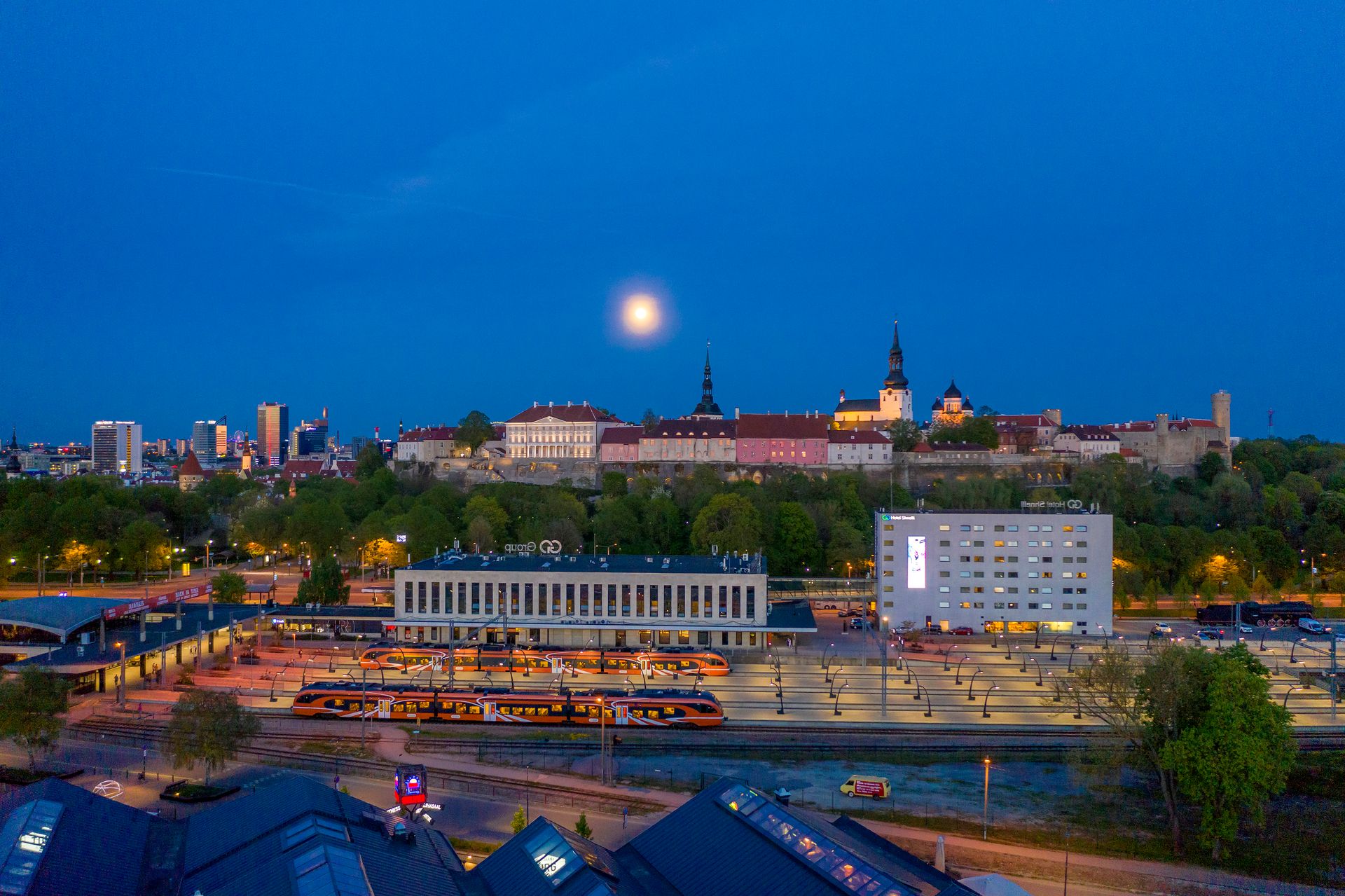
Photo author: Go Hotel Schnelli
By bus
Several international coach companies travel to Estonia from central Europe and the Baltics.
These are some of the main commercial operators:
Further information about international bus schedules is available at T-Pilet.
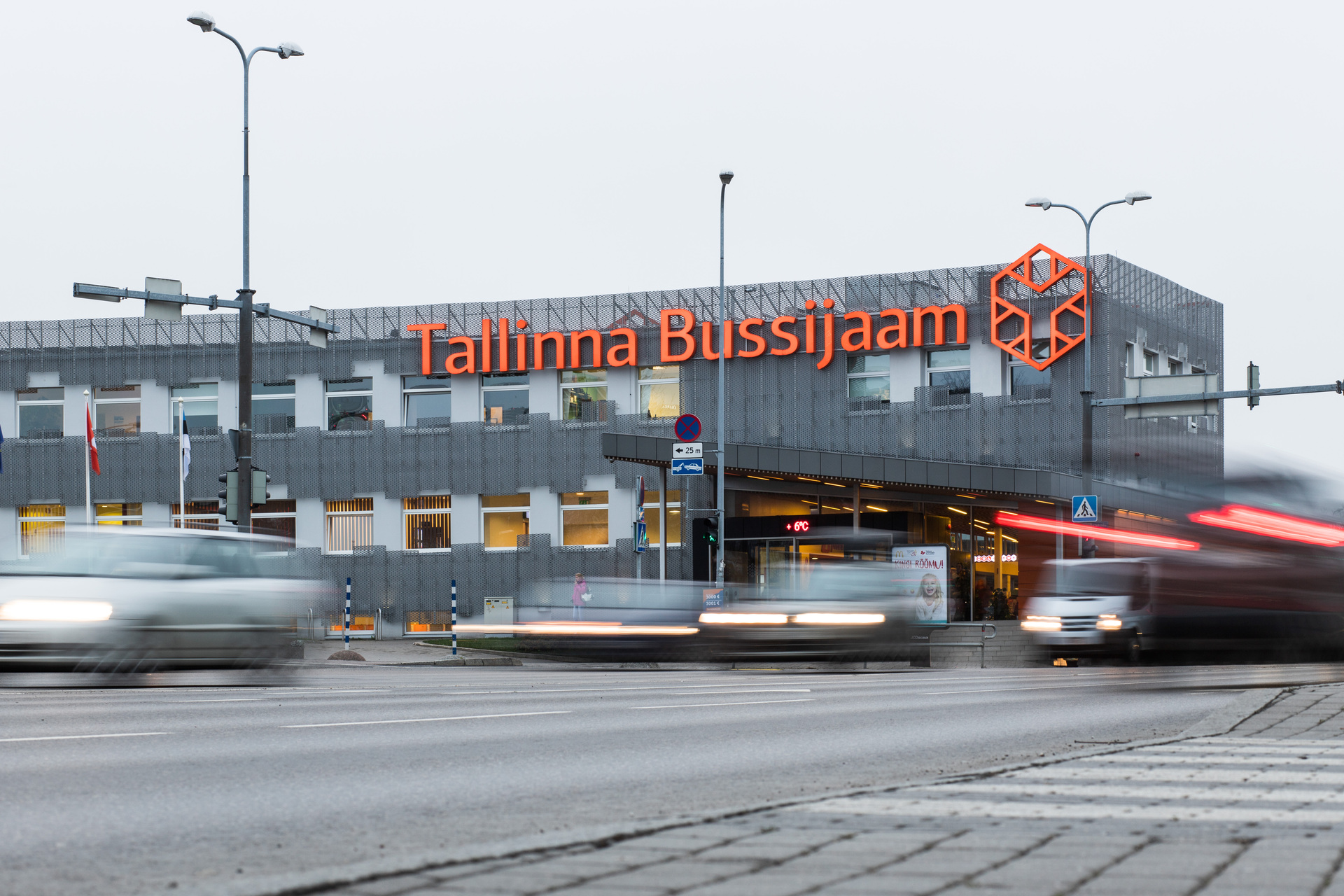
Photo author: Renee Altrov
By car
When driving in Estonia, the following documents should be carried with you:
- Full and valid driving license
- Proof of Insurance
- Proof of ID (passport)
- Proof of ownership (V5C certificate)
Your car will need to be equipped with beam deflectors, a fire extinguisher, and a warning triangle. All vehicles are required to have lights on during the day and night.
Estonia has right-hand traffic. The speed limit in the countryside is 90 km/h, and in urban areas it is 50 km/h unless specified otherwise. During the summer, some highways allow for a maximum of 110 km/h. Passengers are required to wear seat belts and keep the lights on at all times. Estonia has zero tolerance for driving under the influence.
Estonia recognizes driving licenses from countries around the world; please check specific requirements beforehand.
Foreign vehicles must have third-party liability insurance in Estonia. Vehicles registered in an EEA country can only be insured in that specific country of registration. Vehicles registered in the following countries must be covered by a Green Card as proof of insurance: Albania, Andorra, Azerbaijan, Bosnia and Herzegovina, Israel, Iran, North Macedonia, Morocco, Moldova, Montenegro, Serbia, Tunisia, Turkey, Ukraine, Belarus, and Russia.
You can purchase cross-border insurance as an alternative to the Green Card. Those vehicles not registered in EEA or the countries listed above must all be covered with valid cross-border insurance upon arrival in Estonia.
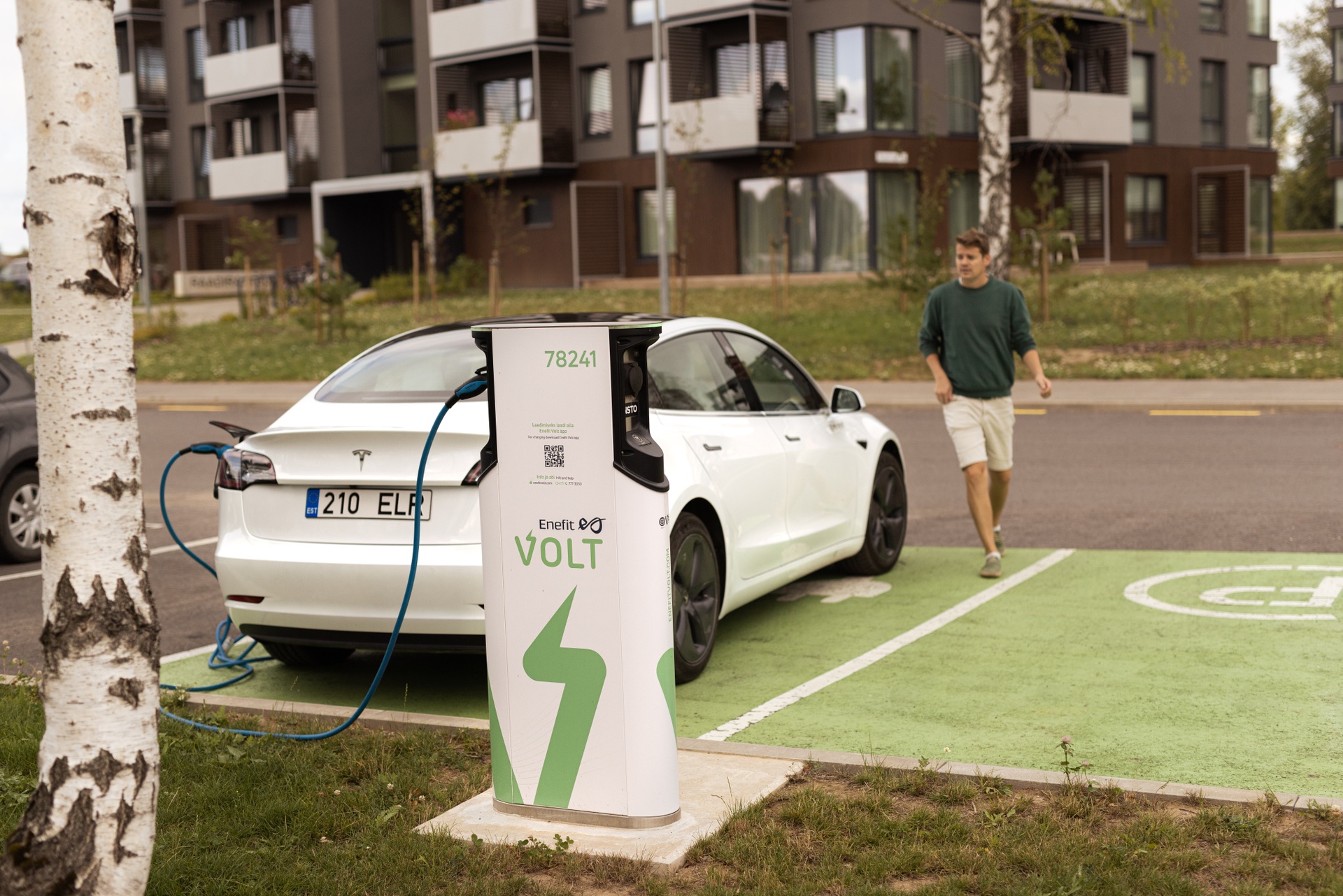
Photo author: Renee Altrov
By your own boat
Estonia is dotted with harbors and small marinas, often located in towns and little villages.
The shortest route from the northern coast across the Gulf of Finland to Finland is just 25 nautical miles.
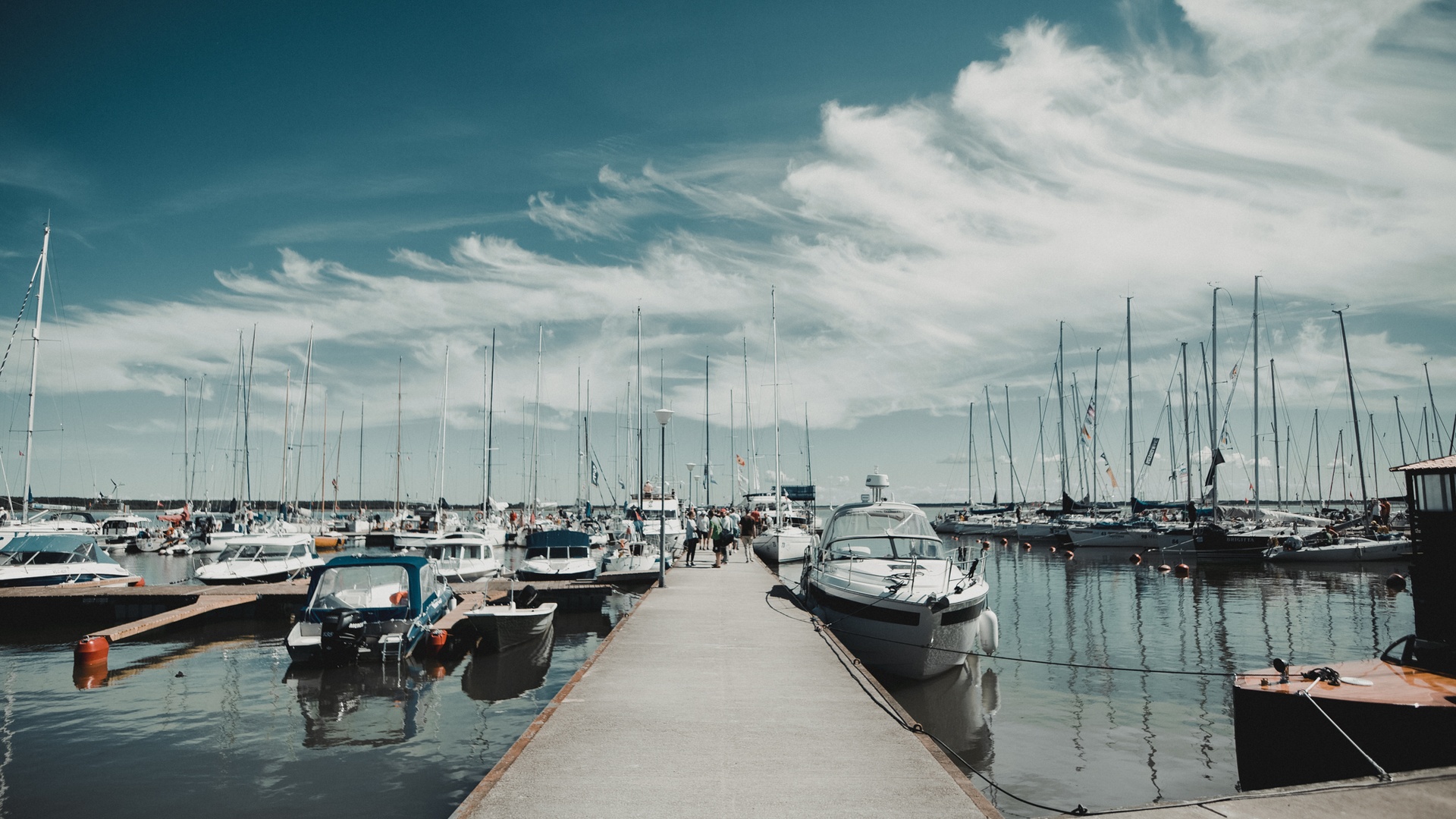
Photo author: Mart Vares
FAQ
Is it safe to go to Estonia right now?
Yes. Estonia is one of Europe's safest countries, with one of the lowest crime rates on the continent, making it an ideal destination for visitors. The country is a member of both the European Union and the Schengen Area, which enables visitors to explore its entire territory without restrictions.
Are Estonians friendly to tourists?
People in Estonia tend to present themselves formally before revealing their friendly personalities to others. Visitors can easily interact with locals throughout cities and tourist areas because English is commonly spoken.
Can you fly direct to Estonia from the UK?
Yes. Multiple airlines operate direct flights between major UK airports and Tallinn. The flight to Tallinn takes about three hours, and the airport is only four kilometers from the city center, making it easy to reach your destination.
Can you drink tap water in Estonia?
Yes. The water supply system in Estonia delivers safe drinking water, which Estonians consume daily. The water quality from taps equals the standards found in bottled water products. Travel sustainably by bringing a refillable water bottle; there's even a handy tap at the airport for filling it!
What currency does Estonia use?
Estonia uses the euro (€) as its official currency. Most Estonian businesses accept both debit and credit cards for payments, and they support contactless transactions for all transaction values.
What is the best way to get around Estonia?
Estonia is a compact country, and getting around is straightforward. The public transportation networks of major Estonian towns offer budget-friendly ticket options via bus and train services. The Tallinn public transportation system offers free travel to residents, but visitors can use all tram and bus services without any restrictions.
Exploring rural areas, national parks, and some islands is easier with a rental car, especially if you plan to stay in the country's more remote accommodation options.
Start planning!
Use our interactive map to find destinations, discover new activities, and design a travel plan.
Get inspired
Last updated
06.01.2026