
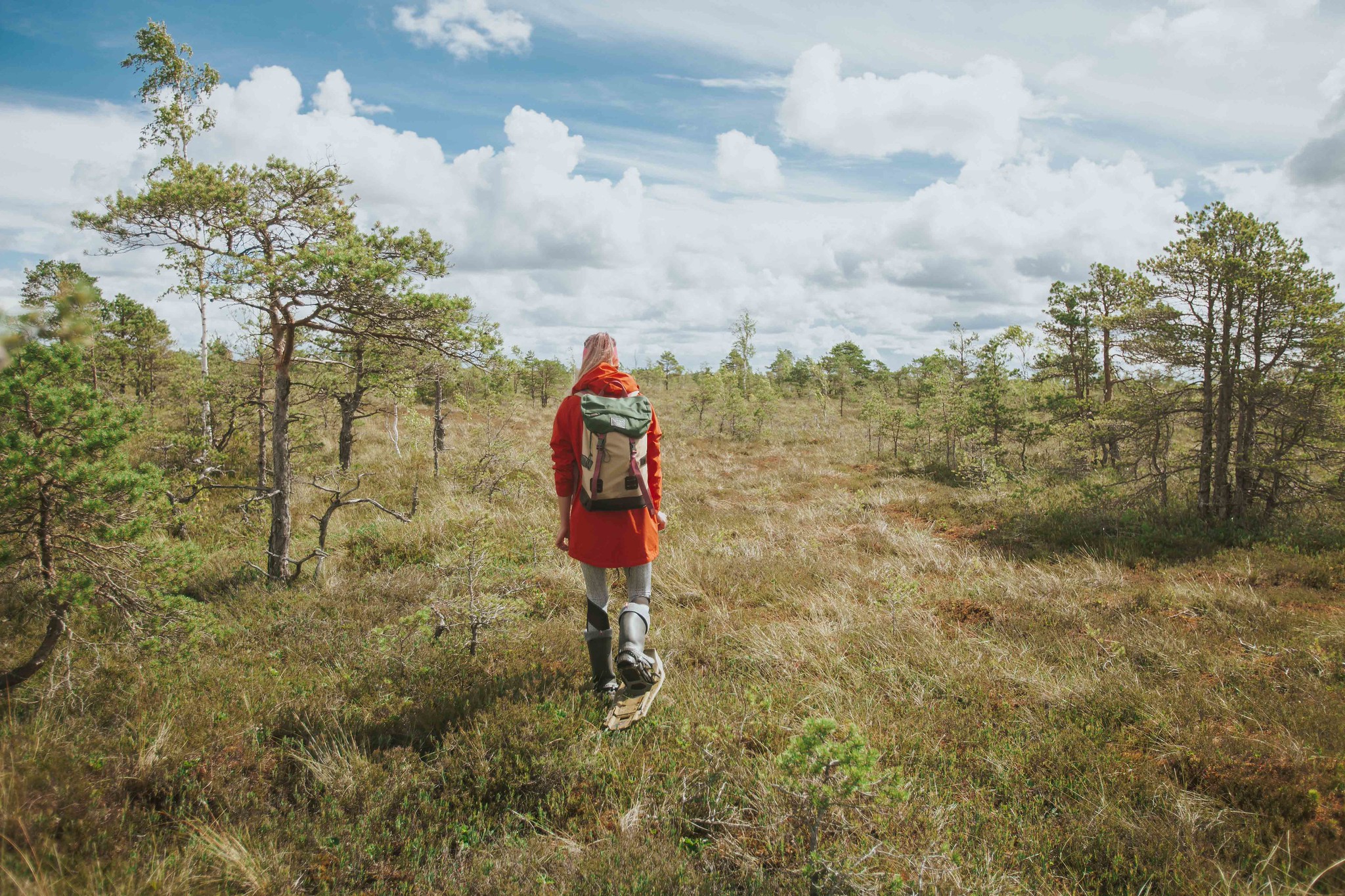
Three reasons to go bogshoeing in Estonia
What does the bog look like beyond the boardwalk? How does it feel to walk on water? Find out for yourself on a bogshoeing hike in Estonia.
Estonians tend to escape to nature every chance they get.
There are no high mountains here; however, there are plenty of low-lying marshes and bogs. Estonians even have a saying, "All Estonian roads lead to the bog."
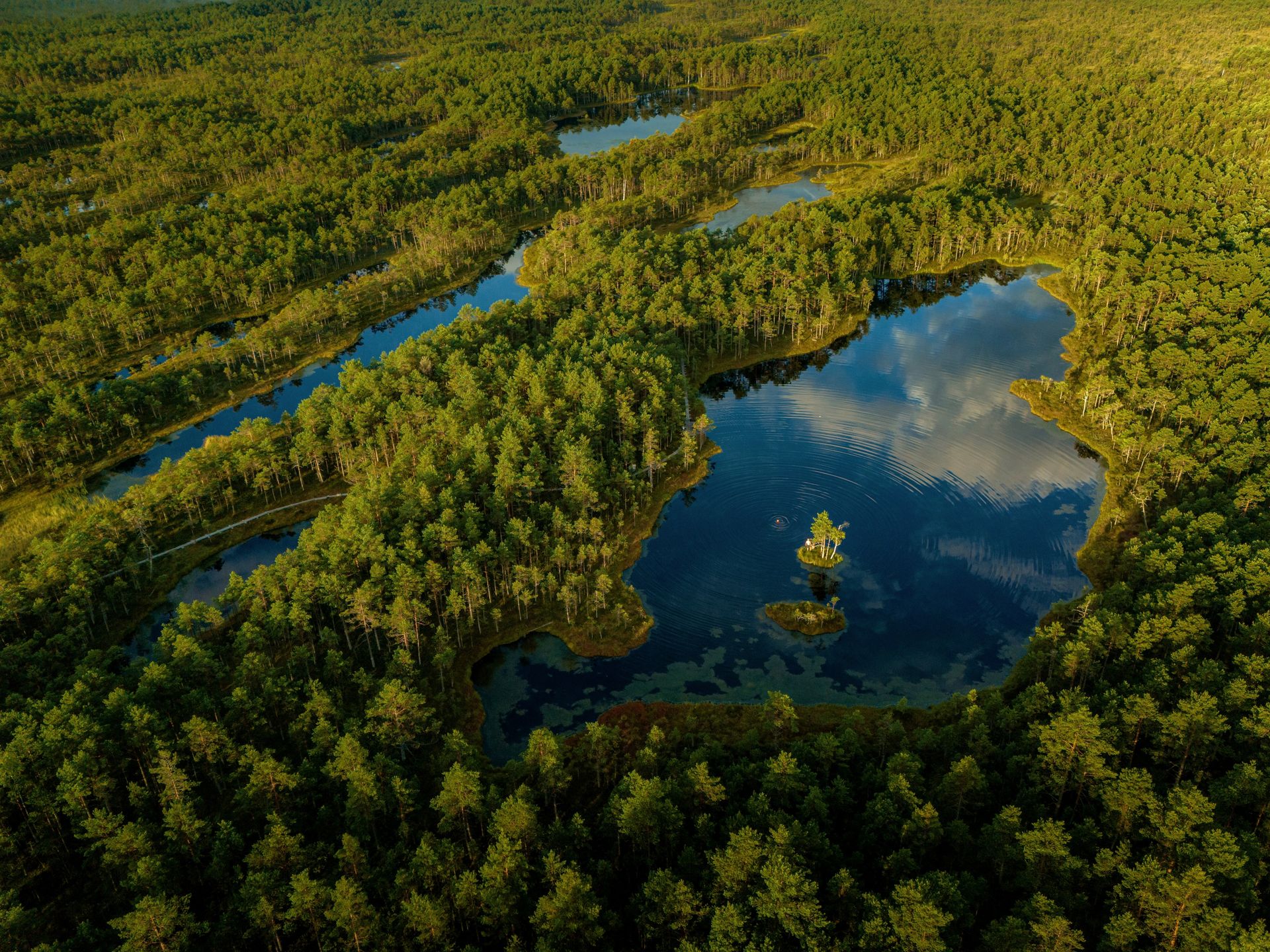
Estonia's bogs are the oldest local organic landscapes in the country, reaching in some cases up to 10,000 years of age. Originating during the Ice Age and forming over thousands of years, bogs have been a source of food, refuge, and, more recently, holiday destinations. The water in bog lakes is extremely pure. Bog water has low mineral content and a very high concentration of organic matter. A bog is also a stomping ground for wild animals, including foxes and rabbits, as well as moose, deer, wolves, badgers, and lizards. Bogs are top destinations for birdwatching. Keep in mind that you will be entering their home, so tread carefully.
Read on for three reasons why you should not leave Estonia before going bogshoeing!
It's the only way you can try walking on water!
1. Bogshoeing is a nature-friendly form of hiking.
Bogshoes are racket-shaped footwear you put on your feet in order to help you walk on soft surfaces.
Since bog soil is soft and wet, you would most likely sink into it if you were to walk on foot. Bogshoes help you move across the surface of the bog without damaging it. In wintertime, bog shoes (or snowshoes) help you walk on snow.
In the old days, bogshoes were made from leather or woven from wicker; modern bogshoes are made from durable plastic with non-skid teeth attached underneath. Maximum convenience! Bogshoes allow you to go where no boardwalk can take you and lead you to places you could never reach on foot. What makes it especially great is that bogshoeing does not require any special knowledge or skills. It is simple and suitable for people of all ages who can get around on two feet.
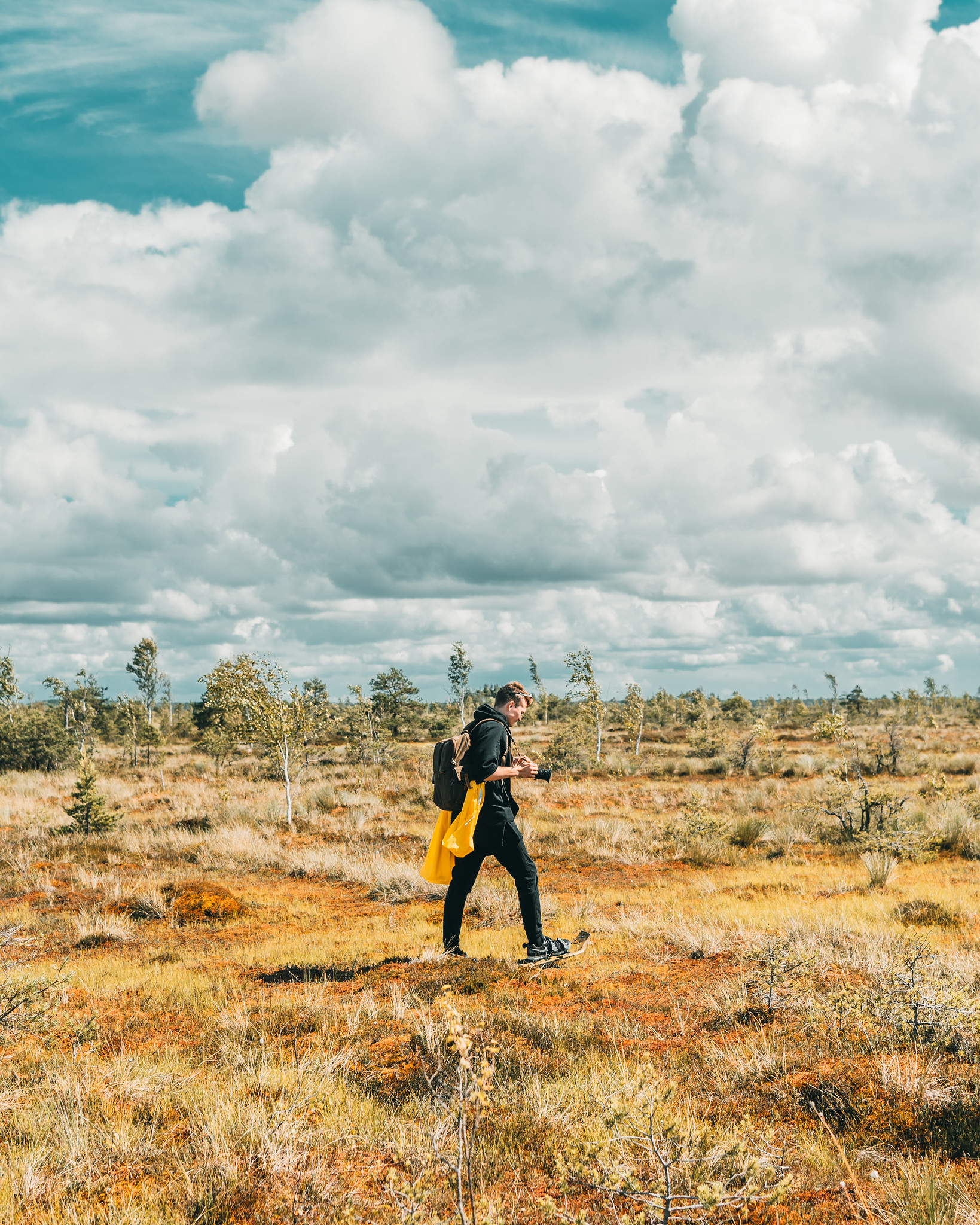
Photo author: Karlis Buskevics, Visit Pärnu
Bogshoeing can be done all year round, but the period from April 23 to June 23 is known as the time of "snowshoe peace."
Many birds nest in Estonia's bogs, and this break from visitors ensures their nests aren't disturbed. During this time, you can still go hiking in the bog, but you have to remain on the boardwalk.
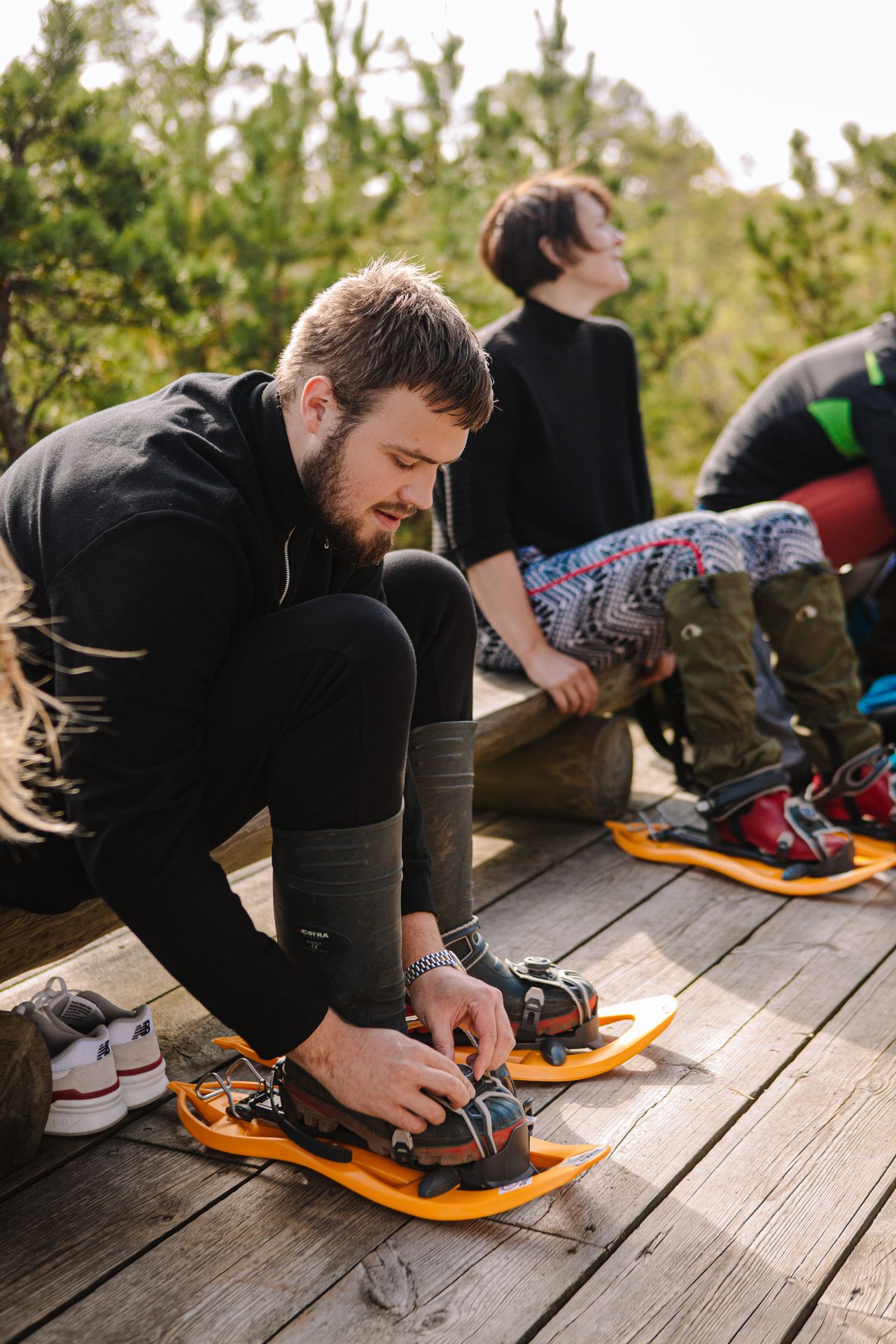
Photo author: Ken Mürk
2. Experience the beauty and charm of nature.
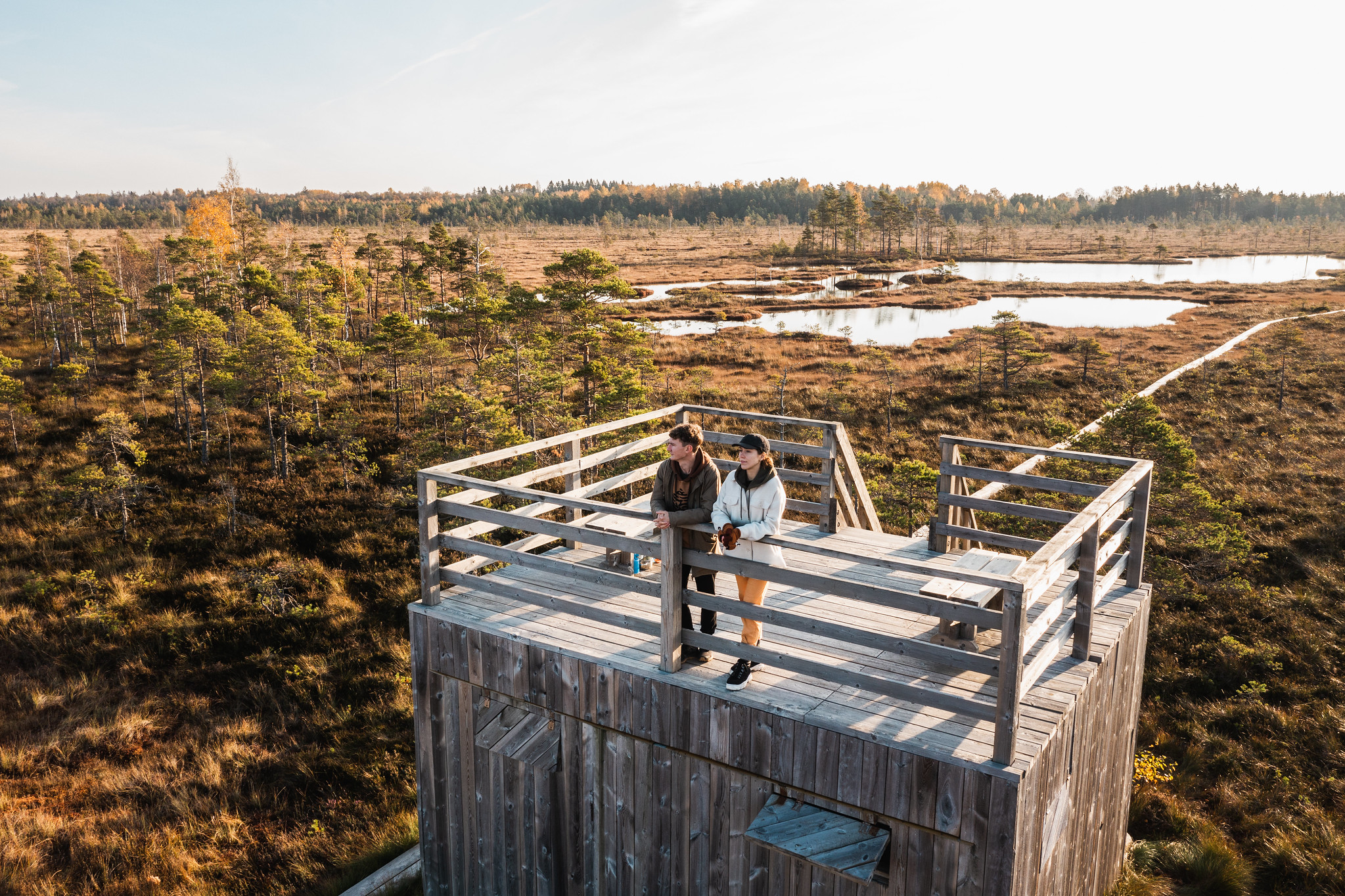
Autumn and winter are said to be the best times for bogshoeing, but every season has its own charms.
Come in the winter and admire frozen bog lakes and discover animal tracks in the snow. Come in the summer to search for cloudberries and bathe in bog lakes. Come in the autumn and enjoy vibrant colours and pick cranberries.
You will surely experience something special if you come bogshoeing during sunrise on an early morning. At that time, the bog landscape acquires a particularly enchanting aura – bog lakes are steaming, and thousands of spiderwebs are covered in dew drops. Once the sun rises, they magically disappear. No, it is not a fairy tale, it is completely true!
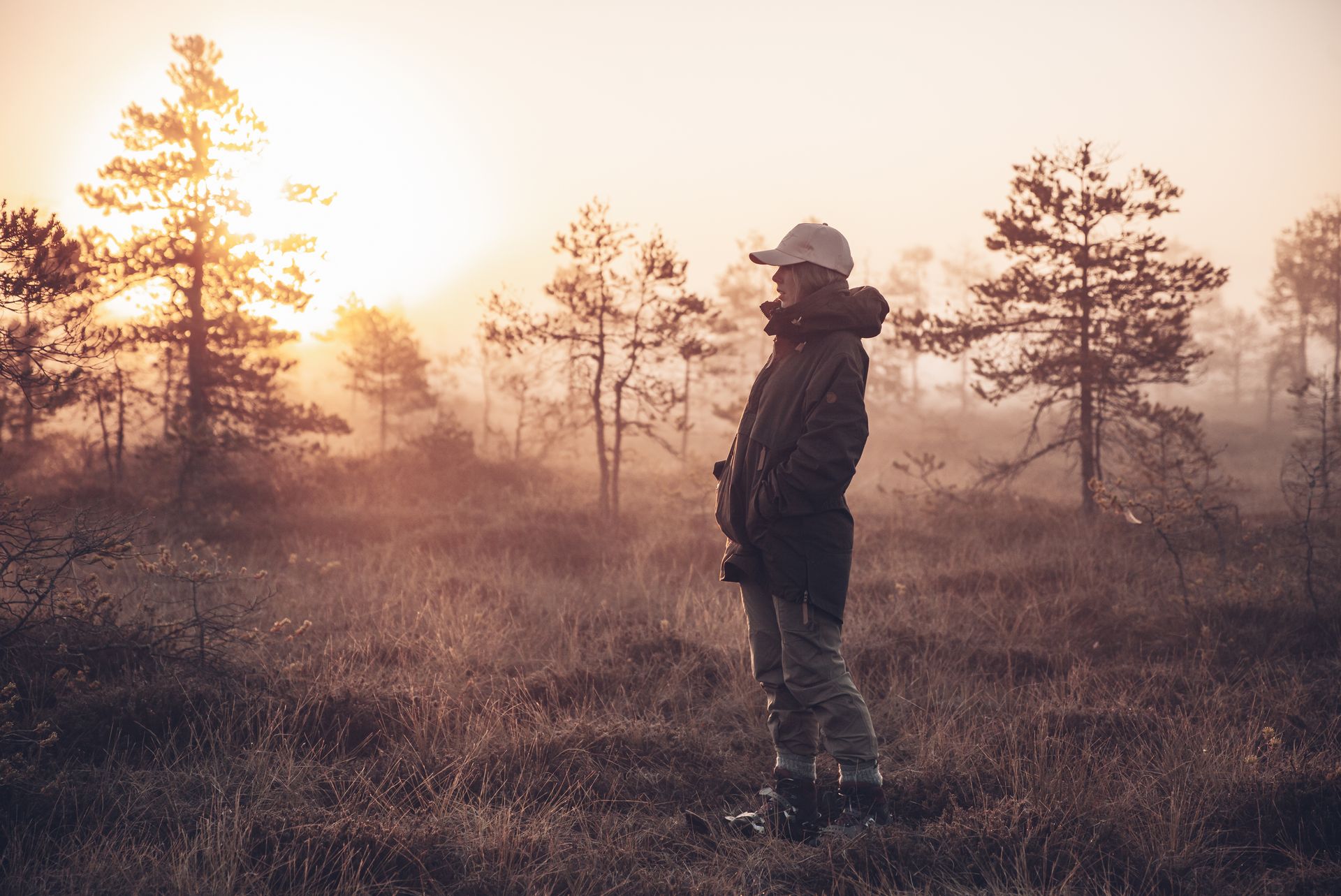
Photo author: Hans Markus Antson
The bog is an untouched wilderness where peace and quiet still prevail.
Have you ever stood in the middle of a bog and heard... nothing? Exactly. No cars, people, bells, whistles, alarms, or sirens.
3. You can relax and let the guide lead the way.
You can rent bogshoes and go to the bog on your own, but it's best to go with an experienced guide.
They will provide you with bogshoes and take you to the most exciting places. They can also tell you great stories of bygone days, bog monsters, and legends, as well as share knowledge of bog flora and fauna. Guides can draw your attention to places you might otherwise walk by.
Since the air in the bog is always clean and the water always fresh, you should not be surprised if your hiking guide makes you tea from bog water. A fire is often set up after a couple of hours of hiking, and hikers are offered a refreshing meal. What could be better?
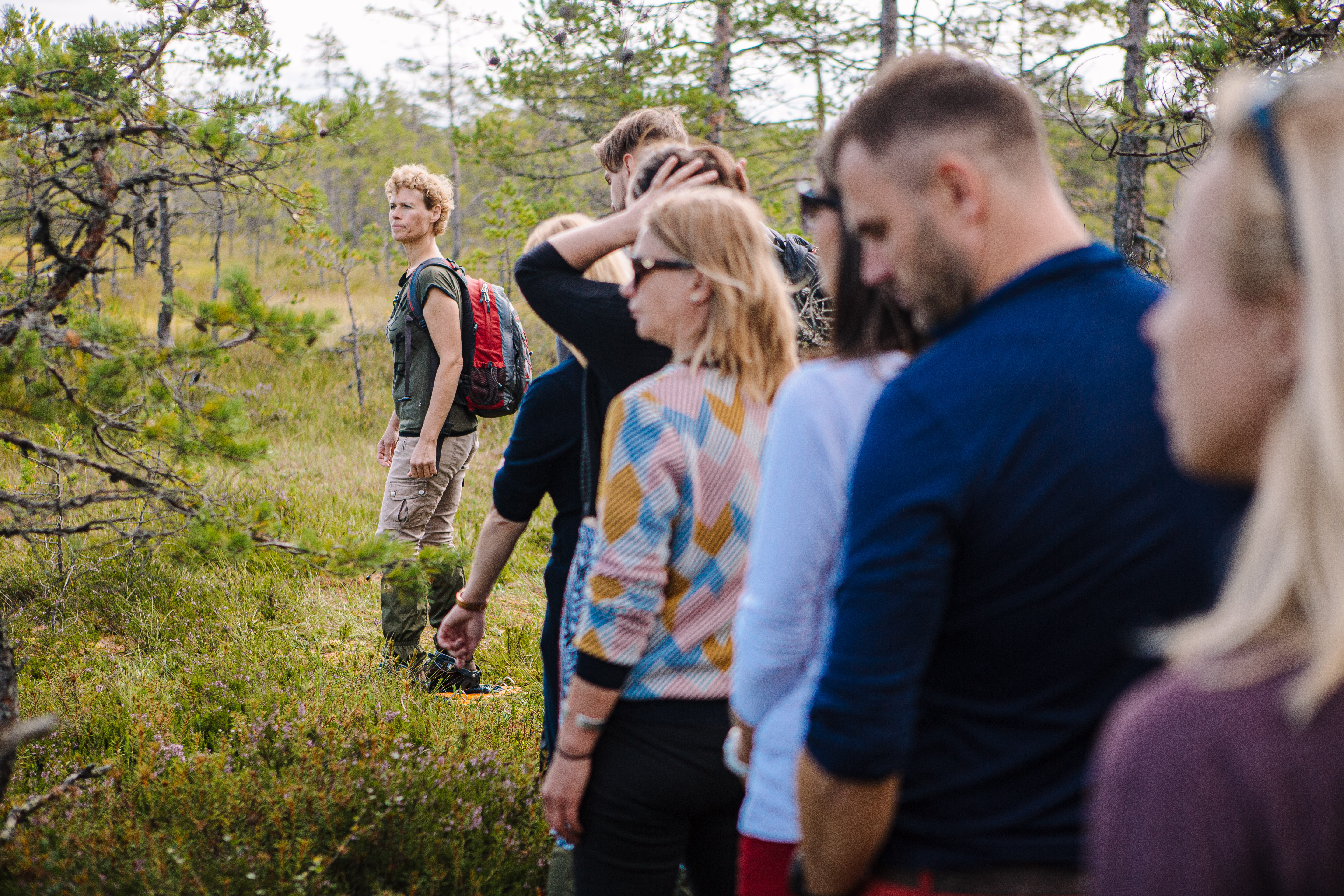
Photo author: Visit Estonia
Fun fact: Estonian folklore is full of stories about bogs, such as the lighting phenomenon known as virvatuled, also called fairy lights or will-o'-the-wisp in English. These lights can usually be seen at night and can lead hikers astray. Or at least that's what the stories say.
Into the bog you go, to free your mind and find your soul!
Get inspired
Last updated
13.07.2026